

Checklist for viewing an apartment: 50 things you need to check
Buying an apartment is one of the most important financial decisions in life. In a market where demand for housing remains high and prices have responded to this demand in 2023–2024, according to data aggregated by Imobiliare.ro and analyzed in the reports of developers listed on the stock exchange, paying attention to details during the viewing becomes essential in order not to pay dearly for later mistakes.
Below you will find a structured checklist with 50 concrete points to check when viewing an apartment, adapted to the realities of the residential market in Romania.
1. The block, structure, and hidden risks
Before falling in love with the furniture, look at the building. The year of construction, type of structure, and history of interventions can weigh more than glossy finishes. Apartment viewing guides recommend that you always start with the block, not the sofa.
- 1. Year of construction and type of structure (reinforced concrete frames, brick, prefabricated panels).
- 2. History of consolidation or structural repairs (ask the building manager or neighbors).
- 3. Façade and roof waterproofing: signs of water infiltration, fallen plaster, recent repairs.
- 4. Stairwell: cleanliness, persistent smells, lighting, secure entrance door.
- 5. Elevator: operation, age, visible maintenance (notices showing inspections up to date).
- 6. Common areas: basement, storage rooms, garbage chute, parking spaces or garage.
- 7. Occupancy rate of the block: many unoccupied apartments can mean higher shared costs for those remaining.
- 8. Check whether there is a risk of obvious structural problems: large cracks in the stairwell, doors that do not close properly, major unevenness in the common flooring.
For older apartments or large investments, consider a technical property inspection carried out by an authorized engineer, who checks the structure, utilities, and finishes with specialized equipment and provides a report of defects and repair costs.
2. Utilities, comfort, noise, and light in the apartment
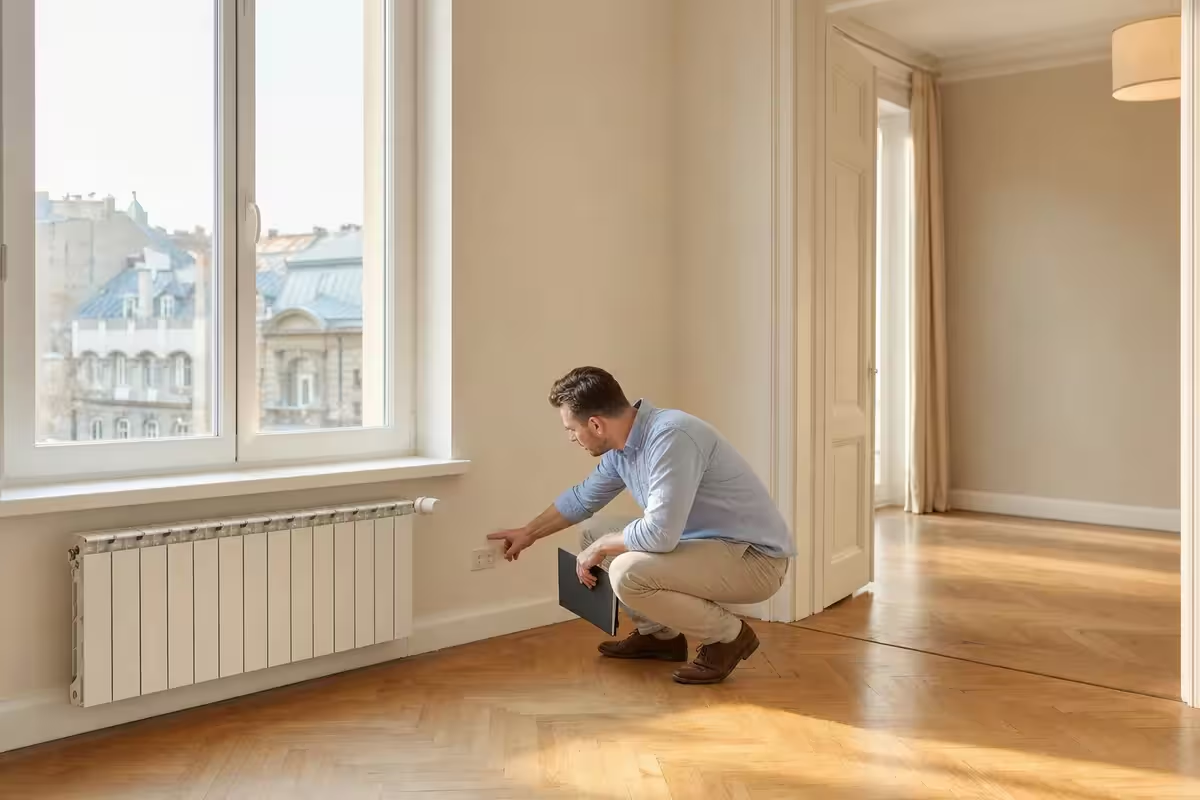
A large share of unforeseen costs after moving in comes from old or faulty utilities, but also from problems with acoustic or thermal comfort. A simple, careful viewing can filter out many surprises.
- 9. Electrical installation: number of sockets, visible improvisations, electrical panel, whether there is grounding.
- 10. Major consumption points (air conditioner, electric oven, washing machine) and their wiring routes.
- 11. Plumbing: water pressure, taps, slow drains, traces of damp under sinks.
- 12. Bathrooms: natural or forced ventilation, traces of mold on the ceiling and in corners.
- 13. Heating: building boiler, own boiler, district heating, heat pumps; the year of the equipment and the last inspections.
- 14. Radiators or underfloor heating system: any water leaks, cold areas.
- 15. Quality of windows: double glazing, airtightness, thermal bridges, condensation in winter.
- 16. Orientation of the apartment: how many hours of natural light it gets and in which rooms.
- 17. Noise: from the street, from neighbors, from the stairwell, or from the inner courtyard.
- 18. Persistent smells in the apartment or stairwell, which may signal ventilation or pipe problems.
- 19. Flatness of the flooring: visible unevenness, cracked tiles, swollen parquet.
- 20. Condition of interior doors and windows: do they close properly, airtight, without excessive play.
The technical property inspection services that have developed in recent years in major cities check exactly these aspects, including with thermal imaging and moisture measurement, to highlight hidden problems and potential remediation costs. This type of report helps you negotiate the price or walk away from a property with high technical risk.
An apartment with old utilities and insulation problems can generate repair and efficiency costs of tens of thousands of lei, which is why the time invested in technical checks during viewing is one of the best long-term “savings”.
3. Neighbors, noise, neighborhood, and actual monthly costs
Even if the apartment looks good, everyday life depends on neighbors, the quality of the neighborhood, and how much you will pay monthly for utilities and building charges. Housing costs include electricity, water, garbage, administration, repair fund, internet, plus any shared services in new complexes.
- 21. Noise level at peak times: try to schedule a viewing in the evening or on the weekend.
- 22. Problematic neighbors mentioned by the seller, building manager, or stairwell residents.
- 23. Cleanliness and organization at the association level: noticeboards, information, posted decisions.
- 24. Plans for major building repairs: roof replacement, elevator, façade, which may involve additional costs in the coming years.
- 25. Certificate from the owners’ association regarding the apartment’s arrears on building charges and existing funds.
- 26. Average monthly costs: ask the seller for copies of the building charge lists from recent months.
- 27. Individual utilities: electricity, gas, hot water, internet; which providers are available.
- 28. Local infrastructure: public transport, shops, schools, parks.
- 29. Parking possibilities: dedicated space, garage, or only free parking spaces around the block.
- 30. Safety of the area: street lighting, traffic, noisy venues nearby.
Local analyses of building charge costs show that, for a 3-room apartment in București occupied by 3 people, total monthly expenses with utilities and building charges can in practice vary roughly between 800 and 1,500 lei, with lower values in new energy-efficient blocks and higher ones in old blocks or with problems in common systems. Differences between neighborhoods and building types are, however, very large, which is why it is critical to look at the actual cost lists of the apartment viewed, not at general averages.
4. Documents, cadastre, land registry, and legal risks
No matter how good the apartment is from a technical point of view, without clear and up-to-date paperwork there is a risk you will tie up money or be unable to obtain bank financing. In Romania, registration of property in the land registry is administered by ANCPI, and transactions are carried out through a notary, who requires a clear set of documents from the seller.
- 31. Original ownership document: sale-purchase contract, construction contract, ownership title, certificate of inheritance, or another transfer document.
- 32. Cadastral documentation and the land registry entry issued by ANCPI.
- 33. Land registry excerpt for authentication, issued electronically, valid for 10 working days for the transaction.
- 34. Check in the land registry excerpt: owner, mortgages, sale restrictions, disputes, easements.
- 35. Fiscal certificate from the Local Taxes and Duties Directorate, confirming that property tax is paid up to date.
- 36. Energy performance certificate, mandatory upon sale.
- 37. Certificate from the owners’ association regarding the updated situation of building charges and funds (repairs, revolving fund).
- 38. Mortgage situation: if the property is encumbered, how the mortgage will be discharged upon sale.
- 39. Consistency of areas: usable and built area in the documents versus what you see on site.
- 40. If the property was recently divided into apartments or reconfigured internally, check for the existence of permits and cadastral updates.
ANCPI explains in the guides made available to the public that registration in the land registry and data updates are carried out on the basis of documentation drawn up by authorized persons and that this is essential for the legal safety of transactions. Notaries require the land registry excerpt for authentication, cadastral documentation, and fiscal certificate before authenticating the sale contract precisely in order to limit risks for the buyer.
5. Key questions for the seller and the final decision checklist
Beyond what you see, what you learn matters greatly. The reason for the sale, the history of the apartment, and the seller’s openness to negotiation can say as much as a crack in the wall.
- 41. Why the apartment is being sold and how long it has been on the market.
- 42. How long the current seller has owned the property and how they acquired it.
- 43. Whether there are or have been disputes related to the apartment or inheritance.
- 44. Whether there have been infiltrations, flooding, or problems with burst pipes in recent years and how they were remedied.
- 45. What renovations or upgrades have been carried out and in which years (electrical, plumbing, windows, boiler).
- 46. What will remain in the apartment upon sale: furniture, appliances, fixed equipment.
- 47. What the actual monthly costs have been over the last 6–12 months, based on building charge lists and utility bills.
- 48. What plans the owners’ association has for the coming years (thermal rehabilitation, elevator replacement, roof).
- 49. Whether major infrastructure projects or new developments have been announced in the area that may affect noise and traffic.
- 50. Whether the seller accepts a reasonable period for additional technical or legal checks before signing.
You can use this checklist as a base and adapt it to your needs: buyer for own use, investor for rental, or buyer of an old versus a new apartment. The important thing is not to rush and to systematically go through all three levels: technical, current costs, and legal.
In a market where demand for apartments is still high, the pressure to decide quickly is strong. However, in practice, a few extra days for thorough checks can make the difference between a safe purchase and one that will consume your time, money, and energy for years to come.
Întrebări frecvente
Ce este cel mai important să verific prima dată la vizionarea unui apartament?
Start with the block and structure: year of construction, condition of the façade, stairwell, and common areas, then check the utilities and only at the end the finishes. Structural or utility problems are the most expensive to fix and can also affect the safety of living there.
Cum pot estima corect costurile lunare ale apartamentului?
Ask the seller for building charge lists and utility bills from recent months, ask the owners’ association about funds and planned repairs, and compare these figures with the area average. Do not rely only on “around” estimates or general citywide averages.
Ce acte trebuie să aibă vânzătorul pregătite pentru un apartament fără probleme legale?
Usually, the notary requests the ownership document, cadastral documentation and land registry entry from ANCPI, the land registry excerpt for authentication, the fiscal certificate from the local tax office, the energy certificate, and the certificate from the owners’ association regarding arrears and funds. Any mortgage or encumbrance must appear clearly in the land registry excerpt and there must be a clear plan for its cancellation upon sale.